
Design of Reduction Motors in Special Environments
Release Time :
2024-10-06
Source :
network
Author:
YONGKUN MOTOR
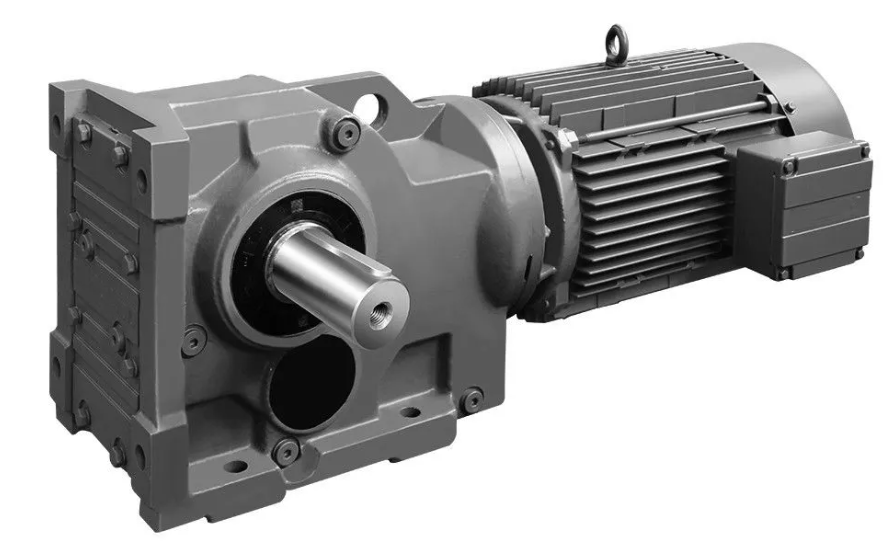
We know that designing a geared motor (a combination of a motor and a gearbox, the same below) in a normal environment is already quite difficult. If special environmental factors are considered, it will become even more complex. Today, we will discuss the precautions required for designing in special environments, mainly from three aspects: temperature, humidity, and altitude.
1. Temperature
Our commonly designed products are typically suitable for a temperature range of -20 to+40 ° C. But often some products require the ability to operate at lower (such as up to -60 ° C) or higher (such as+60 ° C) ambient temperatures.
At temperatures ranging from -20 ° C to -40 ° C, for some mechanical components, we usually need to consider the low-temperature brittleness of the parts, such as:
Shell/End Cap - Convert material from gray cast iron to ductile iron. Ductile iron has high strength, ductility, and impact resistance. Returning ductile iron can bend, twist, or deform without breaking. Its strength, toughness, and ductility are the same as many steel grades, but it has a low-cost casting process similar to gray cast iron. The spherical graphite distributed in ductile iron reduces the discontinuity of the metal structure compared to the random flake graphite in gray cast iron, resulting in a stronger and more "ductile" iron. If the design stress does not exceed the allowable stress, aluminum can also be used.
Rotor shaft - Convert the material from ordinary carbon steel (such as 45 steel) to alloy steel, such as 42CrMo4 or similar materials. Alloy steel has higher fatigue strength and good low-temperature impact toughness compared to ordinary carbon steel.
Junction Box - Switching from Plastic to Aluminum
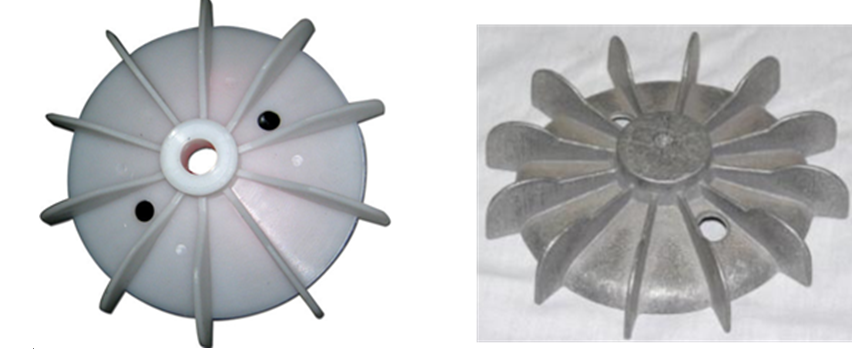
Fan Cover/Fan - Switching from the regular plastic version to sheet metal parts, the fan is made of aluminum, ductile iron, or special plastic materials instead of plastic.
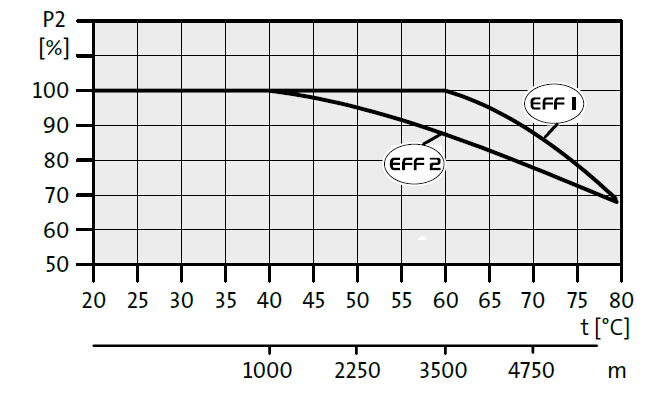
If necessary, it may be necessary to reduce the maximum acceptable gearbox torque or use a larger gearbox.
If the deceleration motor is installed near a heat source (such as near an internal combustion engine or exposed to direct sunlight) at a temperature of+40 ° C to+60 ° C, internal motor components with higher temperature ratings are required. High temperatures can also have a negative impact on motor torque and reduce the performance of sealing components.
Shaft seal: If the deceleration motor is in a low-temperature state for a long time, please upgrade the motor shaft seal to NBR material or use advanced grease for shaft seal lubrication. Elastic materials are composed of polymers, fillers, processing aids, protectants, and curing agents. Oil seals made of nitrile rubber have a rated operating temperature of up to+125 ° C. If the ambient temperature or oil temperature is higher than this level, materials with higher performance need to be used.
Transmission oil: Synthetic lubricants are used when mineral oil is used for internal friction beyond frequent starting and stopping, high loads, system shocks, low or high temperature service, extended oil change intervals, and reduced operating temperatures. They can also operate at higher temperatures without losing viscosity, forming residues and providing foam resistance. Petroleum products begin to degrade at+100 ° C or below, while synthetic hydrocarbon lubricants perform well at+125 ° C. Synthetic materials also have an extremely low temperature advantage. Their vapor pressure is also lower than that of petroleum products, which is an important factor in ensuring that lubricants do not decompose. Compared with petroleum based lubricants, the chemical homogeneity of synthetic lubricants gives them greater load-bearing capacity, higher viscosity index, better lubricity, higher efficiency, and longer applicability.
In addition, the mechanical aspect also needs to consider the thermal expansion and contraction of components caused by high and low temperatures, as well as changes in various design and fitting clearances.
2. Altitude
The heat dissipation on the surface of the motor and reducer decreases with altitude. Due to the thin air, the thermal performance is reduced. The maximum rated installation height is usually 1000 meters above sea level. For higher altitudes, larger motors or strong cooling fans are required to compensate for the reduced cooling capacity caused by thin air.
In addition, if the actual application does not require continuous operation or a high power continuity rate, the power continuity rate of the motor can be appropriately reduced to adapt to higher altitudes.
3. Humidity
Although many deceleration motors nowadays have an IP protection level of IP54 or 55, and can even meet the requirements of IP65 or 67 through certain methods. However, the IP rating cannot provide appropriate protection for high humidity environments, and other measures need to be taken to protect the deceleration motor.
Corrosion prevention: All exposed metal surfaces need to be protected. In addition, the outer surface of the motor iron core should be painted.
Motor heating - This can be achieved by energizing the heater sheath, motor heating belt, or winding to maintain a certain temperature and prevent moisture accumulation in high humidity environments.
Brakes: All worn surfaces must be made of stainless steel, and it is best to use a fully enclosed brake design.
Gear motor,Reducer,electric machinery
Address: No.66 bis, Hetong Road, Dongfeng Town, Zhongshan City, Guangdong Province
Tel:0760-22189558
Mobile:13923325827

©2023 GUANGDONG YONGKUN MOTOR CO.,LTD All rights reserved


