
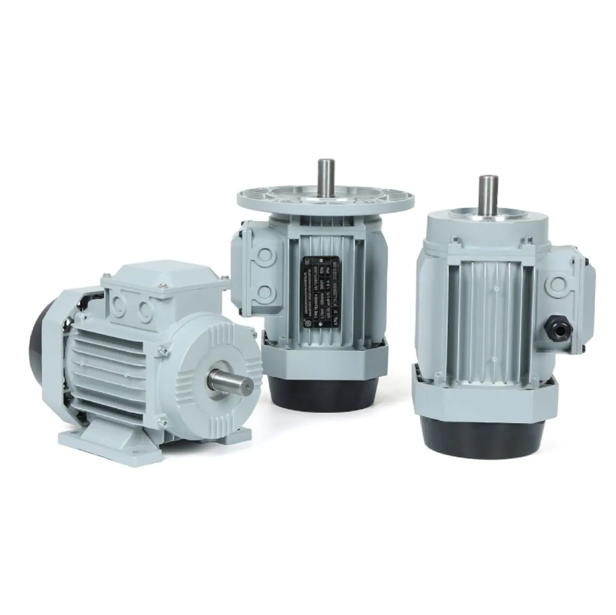
Single-phase asynchronous motor
Release Time :
2024-10-19
Source :
network
Author:
Made by Guangdong Yongkun Motor Co., Ltd
1、 Definition
Asynchronous motors that use single-phase AC power are called single-phase asynchronous motors. The single-phase voltage in China is 220V, while in foreign countries it is 120V, 100V, 230V, etc.
2、 Principle
In an AC motor, when the stator winding passes through an AC current, an armature electromotive force is established, which has a significant impact on the energy conversion and operational performance of the motor. So when single-phase AC is applied to the single-phase AC winding, pulsating magnetic electromotive force is generated, which can be decomposed into two equal amplitude and opposite rotational magnetic electromotive forces, thus establishing forward and reverse magnetic fields in a single-phase asynchronous motor. These two rotating magnetic fields cut the rotor conductor and generate induced electromotive force and induced current in the rotor conductor, respectively.
The interaction between the current and the magnetic field generates positive and negative electromagnetic torques. Positive electromagnetic torque attempts to make the rotor rotate forward; Reverse electromagnetic torque attempts to reverse the rotor. The combination of these two torques is the composite torque that drives the motor to rotate.
3、 Motor composition
Single phase asynchronous motors, with a large proportion of dedicated motors, have their own unique structures, but are mainly composed of stator, rotor, bearings, casing, end caps, windings, etc
1. Machine base: There are several types of machine bases, including cast iron, cast aluminum, and steel plate structures
2. Iron core: including stator iron core and rotor iron core, acting on three-phase asynchronous motors and used to form the magnetic circuit of the motor
3. Winding:
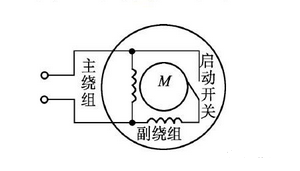
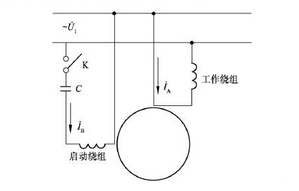
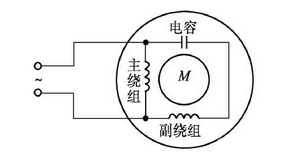
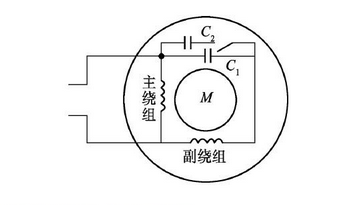
Stator winding: In order to improve the starting and operating performance, it is generally made into two phases: the main winding (working winding) and the auxiliary winding (starting winding), with the central axis of the two types of windings offset by a certain electrical angle. Generally, high-strength polyester enameled wire is used for winding.
Rotor winding: generally cage type winding, commonly made of aluminum die-casting.
4. End caps: Corresponding to different machine base materials, there are also cast iron parts, cast aluminum parts, and steel plate stamped parts for end caps.
5. Bearing: Ball bearing or oil containing bearing
4、 Startup method
1. Single phase resistor phase separation start
2. Single phase capacitor phase separation startup
3. Single phase capacitor operation
4. Single phase capacitor startup and operation
5. Single-phase covered pole type
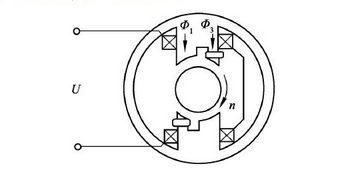
5、 Characteristics
1. Small and lightweight
2. Easy to achieve high-speed rotation exceeding 10000r/min
3. High operating efficiency at high speed and low torque
4. At low speeds, there is high torque and a wide range of speed control
5. High reliability (sturdy)
6. Low manufacturing cost
7. Simplification of control devices
6、 Advantages
Simple structure, low cost, low noise, and minimal interference to wireless systems.
7、 Disadvantages
1. A single-phase asynchronous motor has no starting torque, and if no other measures are taken, the motor cannot start on its own.
2. Due to the presence of reverse torque, the overload capacity of single-phase asynchronous motors is relatively low.
3. The speed of a single-phase asynchronous motor has a fixed slip rate with respect to the synchronous speed of its rotating magnetic field, resulting in poor speed regulation performance.
8、 Application scope
Single phase asynchronous motors have low power and are mainly made into small motors. They are commonly used in household appliances and small power machinery with low power, such as electric fans, washing machines, refrigerators, air conditioners, range hoods, drills, medical equipment, small fans, hand drills, automation instruments, and household water pumps.
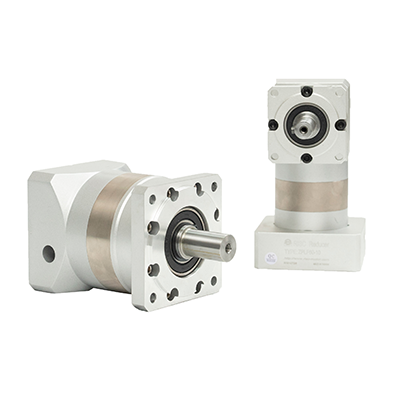
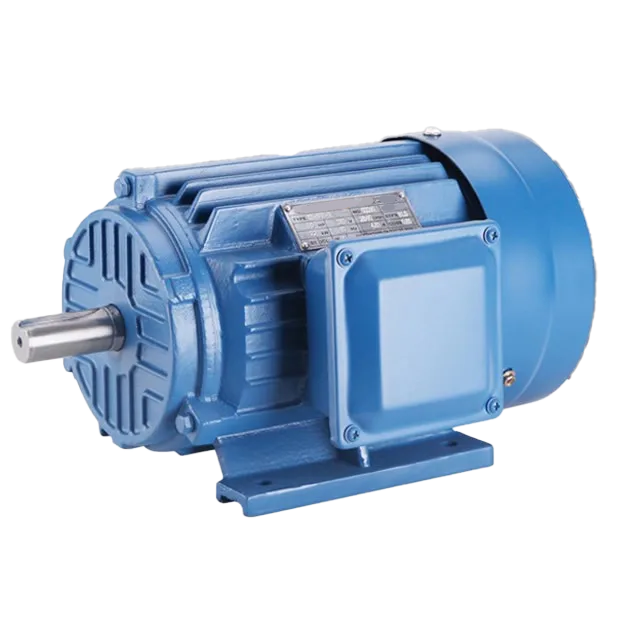
Gear motor,Reducer,electric machinery
Address: No.66 bis, Hetong Road, Dongfeng Town, Zhongshan City, Guangdong Province
Tel:0760-22189558
Mobile:13923325827

©2023 GUANGDONG YONGKUN MOTOR CO.,LTD All rights reserved


